How Much Water Should I Drink for Weight Loss?
There is no established extra water dose for weight loss. Replacing caloric drinks with water can reduce beverage calories, but adding water does not guarantee weight loss. Pre-meal water trials suggest a modest benefit in some adults following a reduced-calorie diet, not a fat-burning prescription.
In practice
Start with what water replaces, not what it burns
If your usual lunch includes a sweetened drink, choosing water changes something concrete: the energy supplied by that beverage. If lunch already comes with water, an extra glass does not repeat that saving. That distinction is more useful than searching for a special weight-loss volume. Your drinking habit sits inside an overall eating pattern, rather than operating as an independent treatment.
CDC’s water and healthier-drinks guidance recommends water in place of sugary drinks to help manage calorie intake. That supports a substitution strategy, not a forecast of pounds lost. Appetite, other food choices, portion sizes and adherence can offset or amplify a beverage change. A label can tell you what a specific drink contains; it cannot tell you your future body weight.
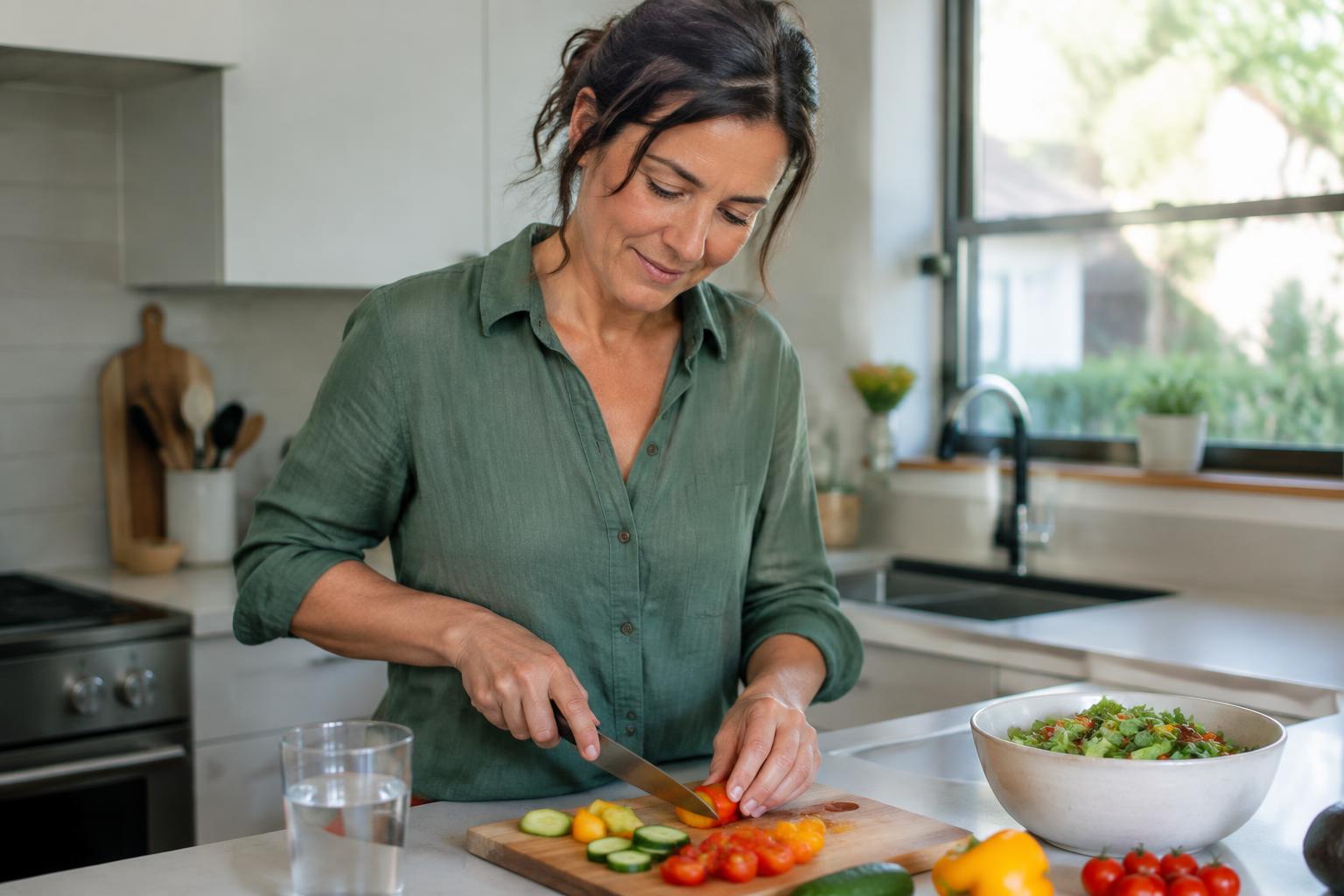
In the kitchen, make the decision easy before you sit down: have enjoyable drinking water available alongside the meal, and choose food that actually satisfies you. The glass beside the salad is an alternative to a caloric drink, not a reason to shrink the meal or ignore hunger.
Swap
Replace a drink that supplies energy; the change depends on the drink you actually replace.
Add
Extra water alongside unchanged drinks does not remove their calories.
Avoid the leap
Beverage calories avoided cannot be converted into a guaranteed long-term weight change.
Evidence
What the pre-meal trial actually tested
Dennis and colleagues’ randomized trial, published in 2010 enrolled 48 adults aged 55–75 with overweight or obesity. Both groups followed a reduced-calorie diet. The water group was assigned 500 ml before each daily meal; the comparison group followed the diet without that instruction. Across 12 weeks, weight loss was about 2 kg greater in the water group. These are study details, not instructions to add that volume to your own routine.
This matters because the common retelling removes the diet, the age group and the small sample, leaving the impression that water alone caused a large, broadly predictable effect. The trial instead offers evidence that a pre-meal routine may help some middle-aged and older adults within a structured dietary intervention. It does not establish an optimal amount for all adults or tell us whether benefits persist after the intervention ends.
The meal tests also complicate a simple appetite story. Energy intake was lower after a water preload at baseline, but the difference was not statistically significant at the final assessment. A finding about body weight does not prove that every meal will contain fewer calories, and this article does not promise a fixed reduction per meal.
| Trial feature | What it means for the reader |
|---|---|
| Reduced-calorie diets in both groups | Water was studied as an addition to a dietary intervention. |
| Middle-aged and older adults | Results do not automatically transfer to younger adults. |
| Modest additional weight loss | A group-average finding, not a personal prediction. |
Reduced-calorie diets in both groups
What it means for the reader: Water was studied as an addition to a dietary intervention.
Middle-aged and older adults
What it means for the reader: Results do not automatically transfer to younger adults.
Modest additional weight loss
What it means for the reader: A group-average finding, not a personal prediction.
Evidence
Why a metabolism claim is not a drinking plan
A temporary physiological response is not the same outcome as sustained loss of body fat. To justify an extra-water prescription, evidence would need to show a meaningful benefit over time in the intended population, with an acceptable balance of benefits and harms. This guide does not establish such a prescription, a cold-water advantage or a reliable daily calorie-burning effect.
Be especially wary when an article multiplies an assumed calorie effect across a year. That calculation treats eating behavior and energy expenditure as fixed, then presents an accounting exercise as a clinical prediction. Neither the CDC substitution advice nor the Dennis trial supports that leap. The honest conclusion is narrower: water can be a useful everyday drink, and some pre-meal routines have been studied with modest results.
A rigid rule can also get in the way of a useful habit. If drinking before a meal causes discomfort, makes it hard to eat adequately or feels compulsory, there is no reason in this evidence to keep forcing it. A sustainable change in what you drink is different from using water to suppress every appetite signal.
In practice
Build a beverage change you can actually maintain
Notice where a caloric drink is habitual rather than particularly enjoyable: the drink added automatically to a takeout order, the sweetened bottle on the commute or the refill during desk work. Choose a change that fits your preferences and budget. Plain or unsweetened sparkling water may work; taste and convenience matter more than a claim about a special water type.
Keep the comparison fair. Coffee with sweetened additions and plain coffee have different energy contents, even though both contain water. Other beverages still contribute fluid; the beverage hydration guide explains why hydration and overall nutritional suitability are separate questions. You do not need to replace every nourishing drink with plain water.
Assess the habit by whether it is practical and whether the intended substitution actually happens. Do not interpret normal day-to-day scale changes as proof that a new water routine is burning fat. If you need weight-management support, a clinician or registered dietitian can help evaluate the broader pattern without making drinking a test of willpower.
- 1
Identify the usual drink
Look at the actual serving and whether it supplies energy.
- 2
Choose a workable replacement
Keep water accessible and choose a taste you enjoy.
- 3
Check the whole pattern
Avoid compensatory restrictions or assuming the swap guarantees weight loss.
How the model works
Use the calculator without adding a slimming allowance
The main calculator shows published adult reference values for total water and drinks by sex and life stage. It does not measure fat loss, appetite or metabolic rate. The methodology describes model assumptions rather than an authority-endorsed weight-loss formula. There is no validated weight-loss addition to apply to its result.
For the underlying definition of daily intake, see the daily-water guide. Published total-water references include food moisture and all beverages, and the calculator shows the drinks share separately. Do not combine a reference total, a model result and a pre-meal trial volume as though they are separate requirements.
Safety
When weight goals make drinking less safe
Do not force water to avoid meals or push through hunger. Excess intake can lower blood sodium; the international exercise-associated hyponatremia consensus documents the danger particularly during prolonged activity. Its exercise setting does not establish a safe drinking ceiling for ordinary life, and adding electrolytes does not make unlimited drinking safe.
Headache, nausea or fatigue after heavy drinking are not instructions to drink again. Confusion, collapse, seizures or difficulty waking require emergency help. Persistent excessive thirst, unusual urination or unexplained weight change deserves medical assessment rather than a revised calculator setting. If you have a prescribed fluid restriction, it takes priority over this guide.
If tracking water or weight becomes distressing, or water is being used to replace needed food, seek support from a qualified health professional. A useful beverage habit should fit adequate nutrition, not compete with it.
Sources & scope
- CDC: Water and healthier drinks
Supports replacing sugary drinks with water to reduce beverage calorie intake, not predicted weight loss.
- Dennis et al.: Pre-meal water trial (2010)
Small randomized trial in older adults on a reduced-calorie diet; protocol, duration and modest additional weight loss.
- Exercise-associated hyponatremia consensus
Overdrinking risk in prolonged exercise; not a universal safe hourly limit.
SnapWaterCalc editorial guidance · Methodology · Full source list
General adult Water Intake Calculator.